It’s Monday morning and the roadmap you finalized last quarter is no longer viable. With market conditions shifting every which way, it’s hard to find your footing, let alone plan ahead. When leadership is pivoting fast, and your team is looking for guidance to navigate the chaos—agility is no longer optional.

Whether you’re leading a transformation or working in the trenches of team enablement, the challenge is the same: driving forward momentum in the face of paralysis and uncertainty.

If you’ve ever struggled to get buy-in, translate vision into day-to-day action, or keep a project from stalling midway, you’re not alone. What most change efforts lack isn’t effort—it’s structure.

How do we steer change when the ground keeps shifting?

In moments like these, it’s tempting to abandon structure and “wing it” in the name of speed. Let’s face it, you’re going to have to adapt your plan in real-time anyway, but agility without alignment leads to more chaos. And change without structure rarely sticks.

In fast-paced changing environments, people crave control, focus, and structure. While you may not have the certainty to build a new roadmap, there’s a lot to learn from the world of Agile Change Management to help steer the ship as you test the waters, iterate, and adapt your plan.

Three principles for steering the ship

Adapted from the 10 Laws of Agile Change Management (from Managing Change in an Agile World).

XPL_Blog_Intro to MCAW_Asset 01

Simplify and Prioritize

Prioritize the core or only the most important work and simplify the rest: the approach, the tools, and the deliverables. A multi-page Gantt chart will bog you down. Teams need fast, abbreviated tools and methods that can be deployed in hours rather than days or weeks. Aim for simple visual tools or a one-page plan, that can be easily followed and rapidly updated without overwhelming your team.

Tools to simplify and prioritize: Start, Stop, Continue, 30/60/90 Roadmap, Scenario planning

XPL_Blog_Intro to MCAW_Asset 02

Elevate Communications

The need for communication takes on an entirely different level of importance in an agile change environment. When things are shifting quickly, it is easy for people to get “left behind.” While communications in traditional change cycles, might look like carefully crafted plans executed over months in advance. In agile change environments, the need for more frequent check-ins, stand-ups, or all-team calls to keep people informed and rowing in the same direction is essential. Establish a regular and frequent cadence of check-ins with teams. Then set expectations for open lines of communication and rapid response with leadership. Use these frequent checks to confirm direction, flag barriers or bottlenecks, and deliver emerging strategies.

Tools to elevate communications: Rapid Reframing Communications, Key Messages, Who/What/When Matrix

XPL_Blog_Intro to MCAW_Asset 03

Balance Long-term Planning with Short-term Responsiveness

One of the greatest strengths of working in fast-changing environments is that it allows for quick course correction and learning. Keep your plan nimble and responsive, but as iteration yields insight, and you start to see a new direction emerge, take the time to connect those iterative, incremental pivots to the overall vision. It will be easy for others to lose sight of the bigger picture amidst the waves of change.  Anchoring to a vision will help stabilize and re-engage teams toward a broader purpose.

Tools to balance long-term planning with short-term responsiveness: Changing customer, Eight dimensions of Org, Vision Map

Structure Still Matters in a Fluid World

When change happens constantly, structure can feel restrictive. But the truth is, structure provides the clarity and focus that fluid environments often lack. It helps your team move from reactive mode to intentional action.

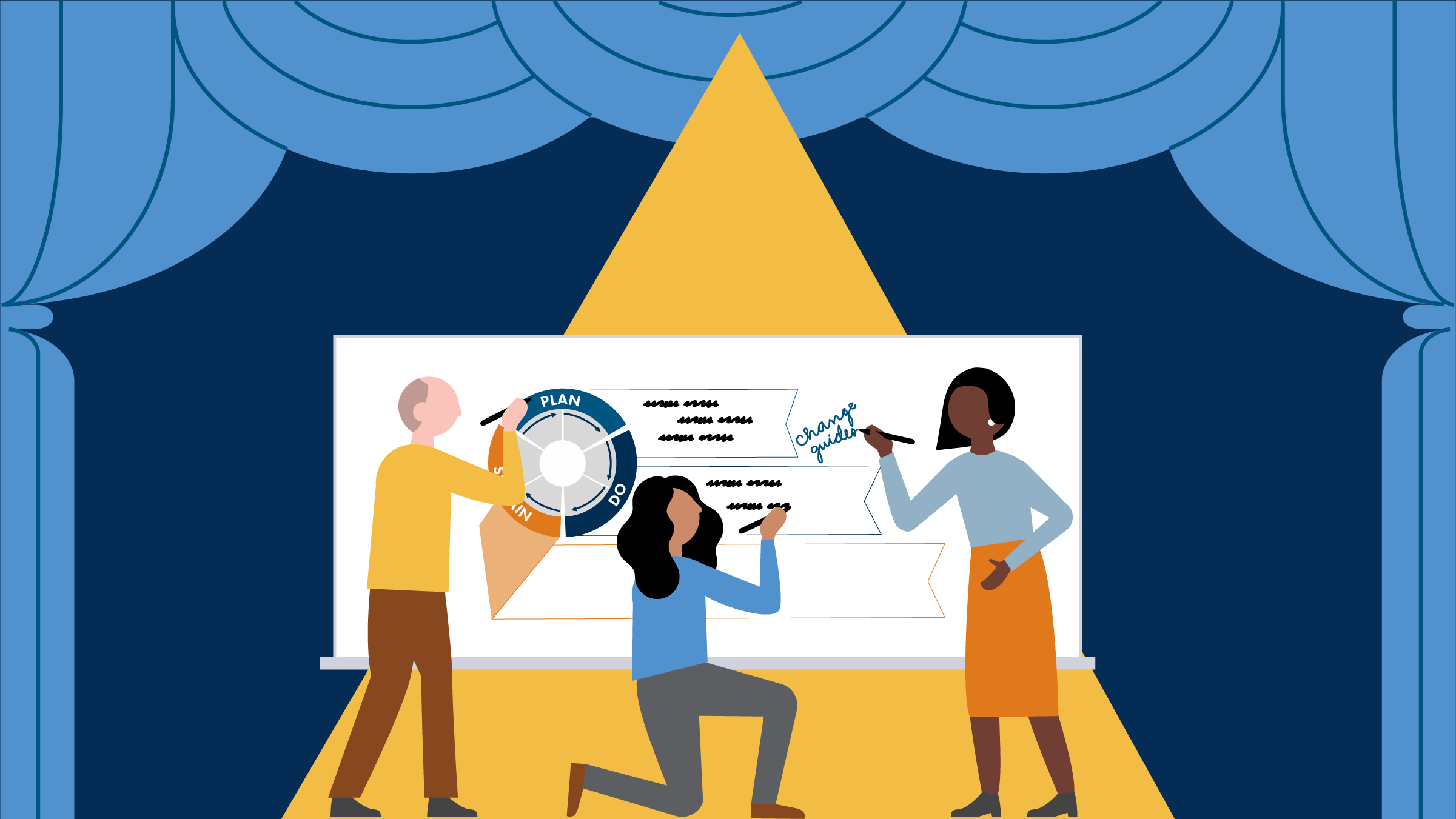
Research shows that organizations that pair clear change processes with agile execution outperform their peers in change adoption and business outcomes. The Change Guides’ methodology allows you to turn chaos into change that sticks.

Stay ahead of change—the agile way

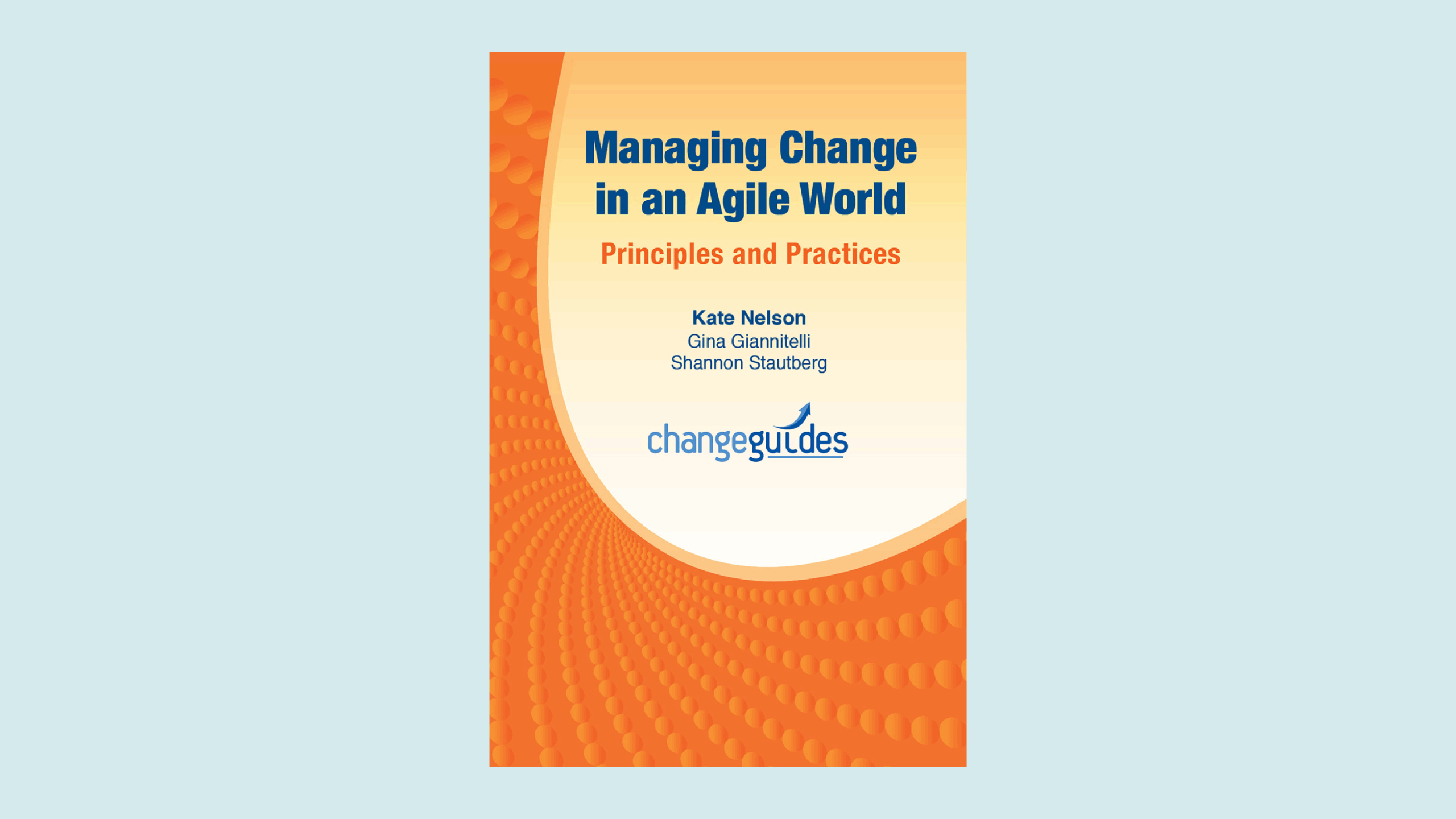
Like it or not, leading in fast-changing conditions is here to stay. Invest in upskilling your team and your own capabilities during the upcoming Managing Change in an Agile World Certification.


What You’ll Learn

Over the course of this certification, you’ll build practical skills to:

  • Create an agile change plan that aligns with business goals
  • Communicate change in a way that builds trust and reduces resistance
  • Mobilize change agents across your organization
  • Identify and address the barriers to change

You’ll walk away with a guide of 10-tools you can use immediately—and a certification that demonstrates your readiness to lead change in fast-paced environments.

Who It’s For

This course is designed for anyone responsible for leading or enabling change—including:

  • People leaders and department heads
  • Program and project managers
  • Learning and development professionals
  • HR and talent leaders
  • Agile coaches and facilitators

Learn It. Apply It. Lead It.

If you’re ready to stop guessing and start guiding change with confidence, this course is for you.

Managing Change in an Agile World

Stay ahead of change—the agile way to lead through uncertainty.