Why collaboration, not technology, is the real lever for transformation
Across industries, organizations are beginning to recognize that AI transformation requires more than technical readiness. It requires collective clarity.
If you’re leading an organization right now, you’re likely holding two competing realities: You’re expected to move quickly on AI. And your teams aren’t fully aligned to move with you.
There’s no clear roadmap, no shared playbook, and a lot of incentives to move fast.
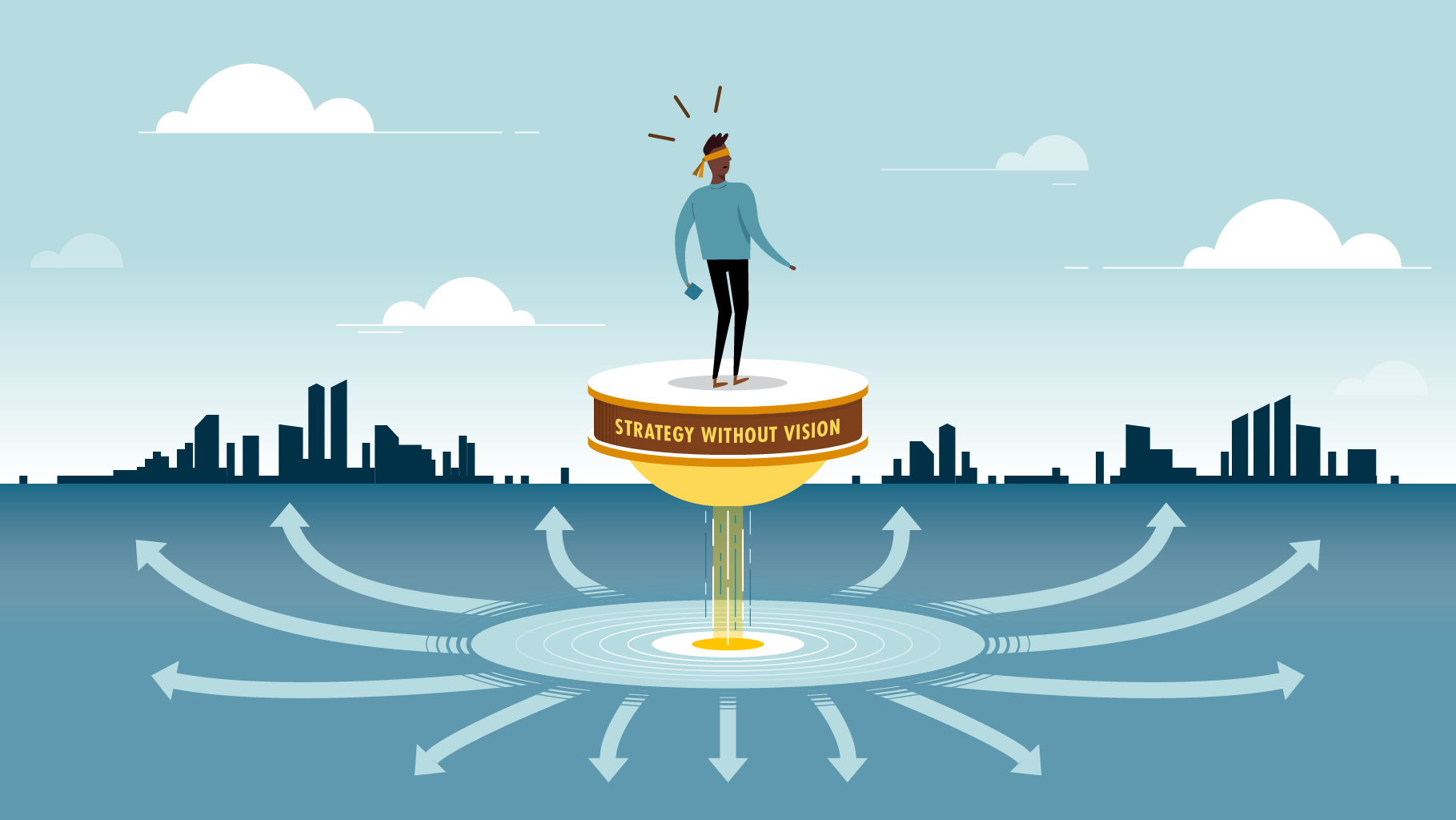
So, the instinct is to push forward—to implement, to scale, to capture value. The risk: without alignment, momentum turns into drift. Teams move quickly—but without a unified purpose.
At TiER1 we often call this drift or the illusion of progress, Motion
...a frenzy of busyness that can be contrasted by true forward Movement
This transformation effort may go by a different name, but the change challenge remains the same. Not a technical one, but a fully human one: disconnect on the what and the why, role ambiguity, siloed experimentation, and no clear picture of success.
In the end, like most change efforts, the AI transformation is less about technology and more about how people and systems adapt around it.
Simply investing in more technology won’t resolve the tensions of change adoption. They’ll persist until the people and the systems around the work – roles, expectations, and behaviors – evolve together.
When teams align around a shared direction, that momentum starts to compound. Effort connects, decisions accelerate, and progress begins to build toward something that actually matters
Creating the Conditions for Collaboration
The leaders navigating this moment most effectively are the ones creating space to align their teams around a shared vision and those designing the conditions for people to work differently—together.
This is where human-centered facilitation becomes a strategic lever. Instead of assuming answers, it helps surface what’s often invisible:
Where understanding is fragmented
Where fear or hesitation is shaping behavior
Where opportunity is being missed
In a collaborative space, AI stops being an abstract mandate and becomes a shared challenge to solve. Leaders move from broadcasting direction to co-creating meaning. And teams begin to see not just what’s changing—but how they can help shape it.
Here’s how this is showing up in our work. During a recent alignment workshop, HR and People leaders responsible for guiding AI integration across automotive and financial services teams were asked to envision their work one year into the transformation. Not in technical terms, but in human ones: how decisions get made, how ways of working change, where time is spent.
What emerged wasn’t a single answer, but a shared direction:
AI embedded into workflows, not sitting beside them.
Clear expectations tied to roles.
More capacity for strategic, human-centered work.
Just as important were the gaps they named:
No aligned approach.
Lack of guardrails.
Uncertainty about what “good” looks like.
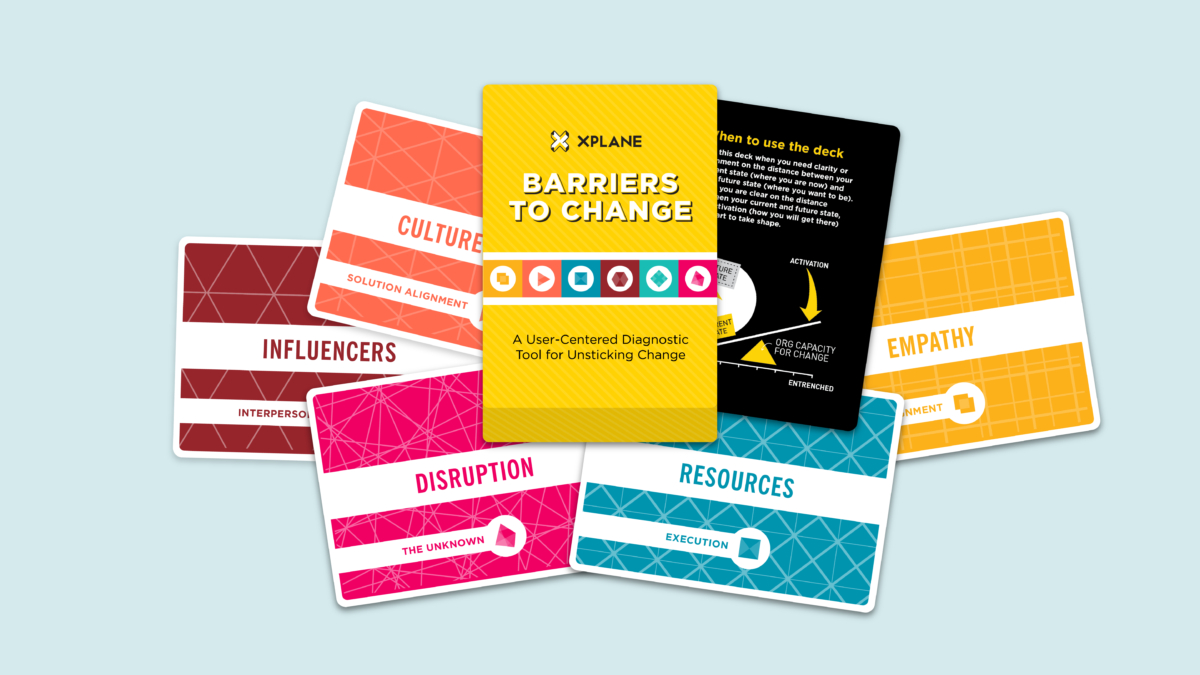
In another engagement with a global airline, leaders took a different angle. Instead of defining the future, they surfaced what had been getting in the way of transformation efforts broadly. Through XPLANE’s Barriers to Change workshop, they identified the real sources of resistance: confusion, fatigue, fear, and misalignment.
Mapped against the Activation Curve, these barriers became actionable. Leaders could see where their teams might struggle—not in theory, but in practice. And more importantly, they could align on how to support teams through a number of transformation efforts, from customer experience to tech-adoption.
Creating structured moments for leaders and teams to step out of execution and into reflection, made the invisible visible inside the organization—surfacing friction, aligning on what matters, and building shared ownership for what comes next.
So, what can you do?
Start by reframing the challenge. Is this a technology problem? Or is it a mindset and behavior shift?
Most transformations, AI or otherwise, don’t fail due to lack of tools or training. They stall because people haven’t had the opportunity to understand, explore, and shape how the change fits their everyday work.
In the rush to move fast, it’s easy to overlook what hasn’t changed:
People support what they help create.
People need space to learn, experiment, and solve problems together.
And new habits don’t stick until awareness turns into belief—and belief needs intentional reinforcement, a vision others can follow, and time to take hold.
Technology may create more opportunities, but it’s aligned behavior shifts that determine if the change translates into long-term outcomes.