Bridging the Generational Gap: Turning Communication Clashes into Collaboration
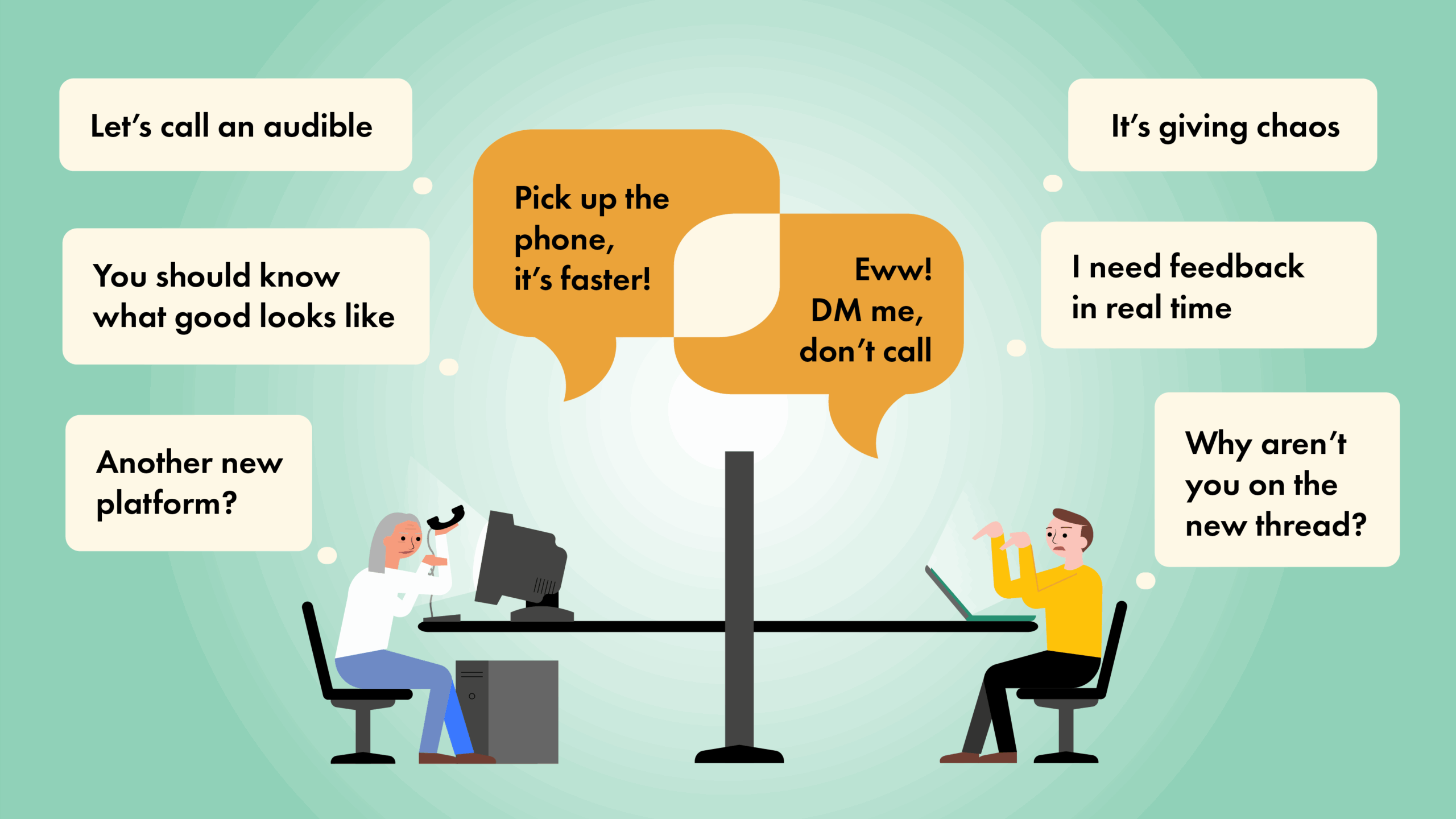
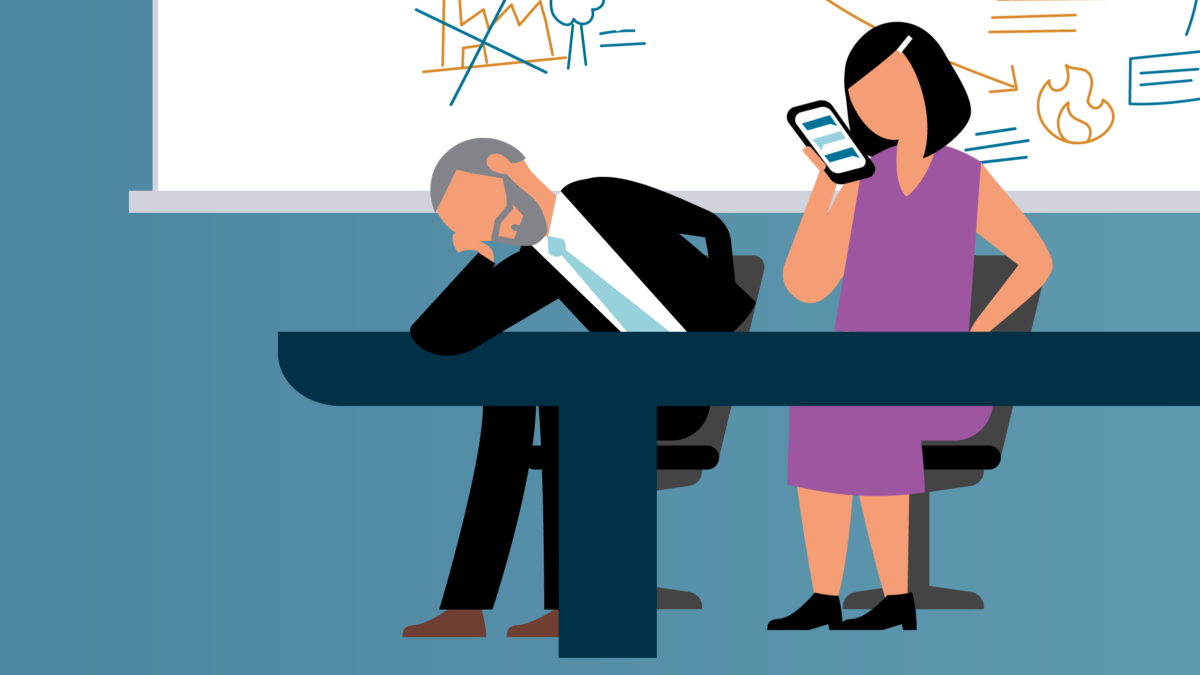
She wants to call a meeting. He wants to send a Teams message. Both mean well. But sometimes, workplace communication feels like a cross-cultural exchange—without the passport.
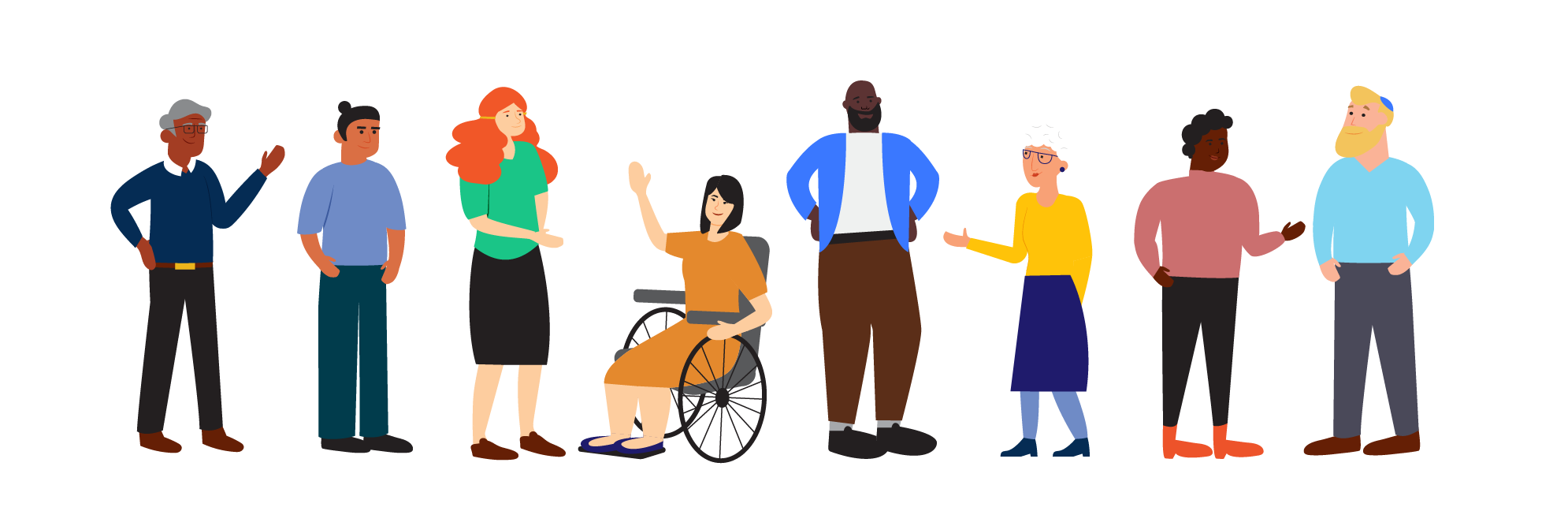
Five Generations, One Team
The project update has barely begun when one teammate cheerfully suggests, “let’s hunker down and hash this out.” Another rolls their eyes and mutters, “this could’ve been an email.” Cue the laugh track—or maybe the awkward silence. What feels like a punchline in a sitcom is actually a daily reality in the modern workplace: generations talking past each other while trying to get the same job done.
Both are aiming for efficiency, but their approaches couldn’t sound more different. These are examples of micro-miscommunications that happen every day in our multigenerational workplaces. With four (sometimes five!) generations clocking in together, it’s no surprise that we don’t always speak the same language… even when we think we do.
Why Intergenerational Conversations Matter—Now More Than Ever
Today’s workplace isn’t just multigenerational. It’s also more distributed, more virtual, and more emotionally complex than ever before.
We’re still navigating the ripple effects of COVID, which shifted how we communicate, collaborate, and even show up for one another. Add in political division, economic anxiety, and a culture where people are more hesitant to engage across differences, and it’s no wonder meaningful workplace connection feels harder to come by.
Yet, it’s never been more important.
Research shows:
89% of Gen Z and 92% of Millennials say purpose is key to job satisfaction (Deloitte, 2025)
Soft skills like empathy, adaptability, and communication are rising to the top of what teams need most (Search Wizards, 2025)
And yet, generational miscommunication remains one of the top causes of workplace tension (Inclusion Geeks, 2025)
We recognized this firsthand, across client organizations and within our teams, and knew we needed something simple, human, and real to help bridge the gap.
Bridge the Generational Gap
What if, instead of letting those differences create distance and resentment, we turned them into an opportunity for connection?
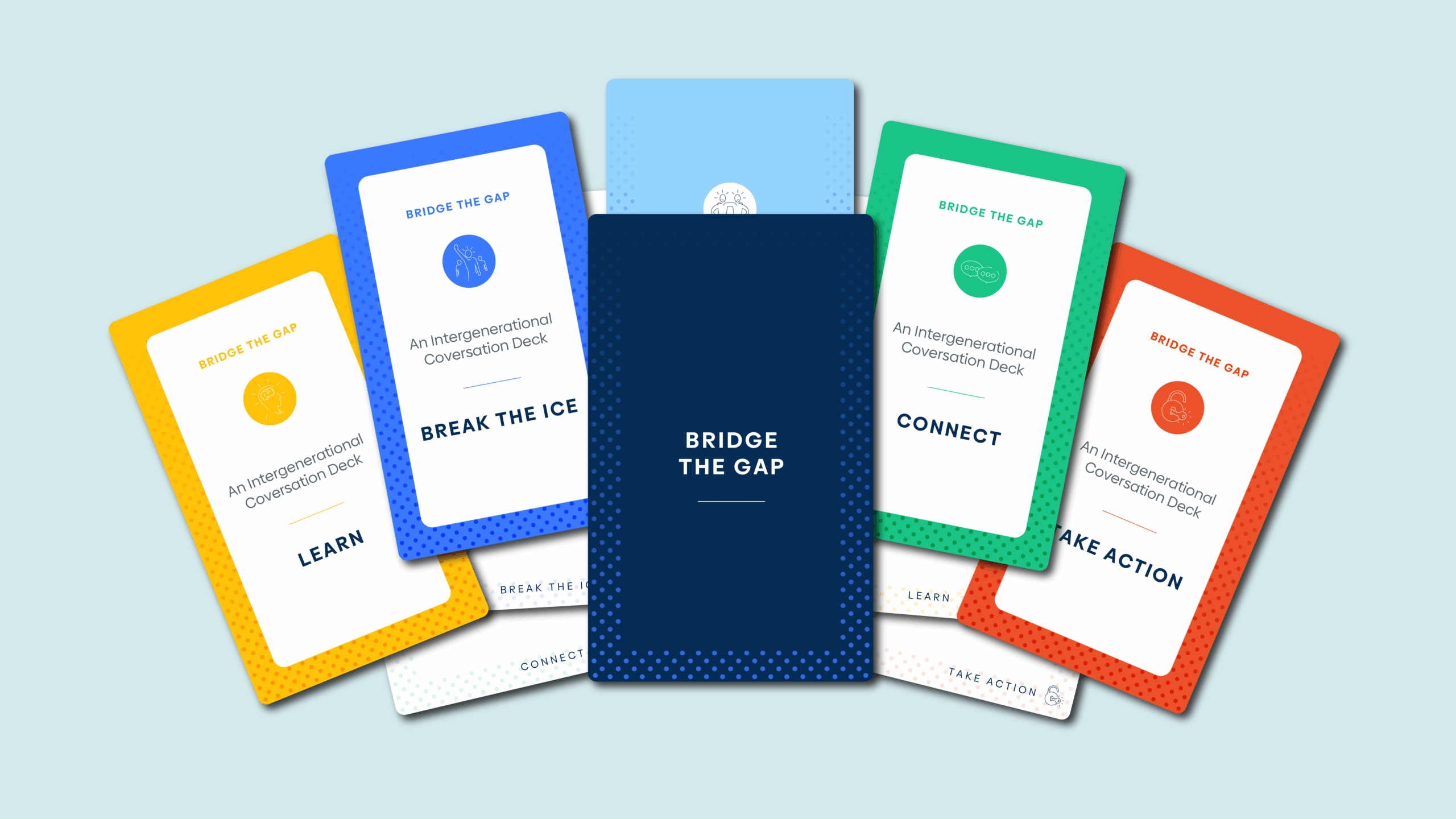
Whether you’re huddled in a team meeting, hosting a leadership retreat, or onboarding new employees, this self-guided team experience prompts a thoughtful and engaging way to talk about how we work, communicate, and see the world—without judgment.
Inside the Deck
Some prompts are playful: “Show the team how you would mime answering the phone or rolling up a car window.”
Others go deeper: “What does ‘meaningful work’ mean to you?” or “What’s one thing you wish other generations understood about yours?”
Either way, the result is the same: connection that feels refreshingly human.
What You’ll Gain (Besides Fewer Team Misfires)
Using Bridge the Gap helps teams:
Build empathy and reduce assumptions between generations at work
Strengthen collaboration across generational lines
Foster a culture where everyone feels seen, heard, and valued
Go from “why are they always calling instead of emailing? To “oh, that’s how they grew up communicating, and that’s why it still feels more respectful to them.” To “now we’ve found a rhythm that works for both of us.”
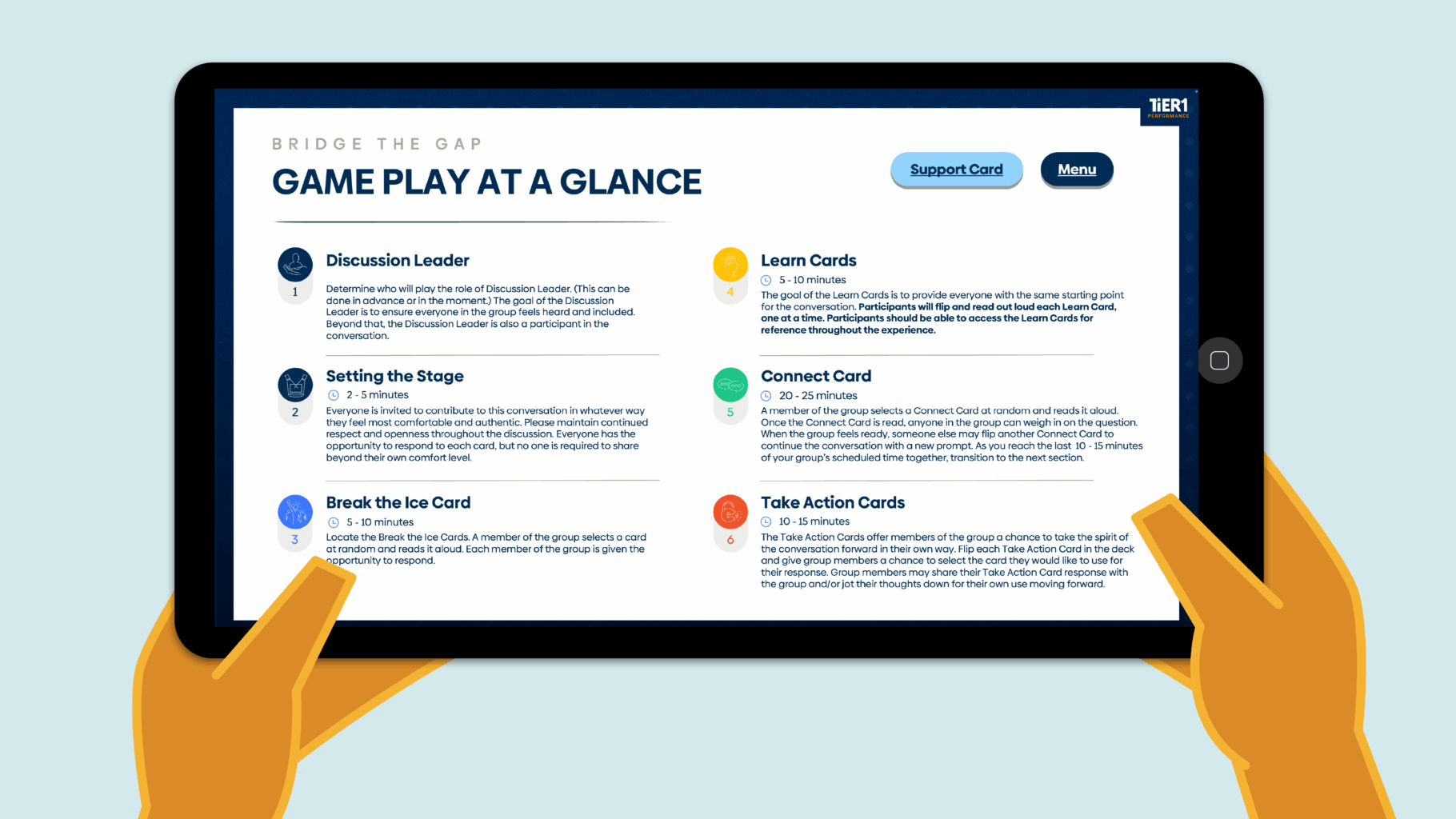
Best of all, this is a fully designed, all-in-one guided 60-90 minute experience that you can complete with your team. The materials, instructions, prompts, and gameplay are baked in so that anyone can lead the conversation for teams.
Let’s Start the Conversation
Bridge the Gap isn’t just a tool. It’s a mindset. It’s about choosing curiosity over assumption. Humor over irritation. And empathy over eye rolls.
So whether you’re a “Just call me” kind of person or a “Please just text” human, there’s room for everyone at the table.